


What Credit Unions Really Pay for ATMs, and Why They Still End Up Managing Them
Most credit unions don't have an ATM problem. They have an ATM cost problem, with a management problem stacked on top of it.
The large ATM providers have priced a big share of the market out. Credit unions that stay with them tend to pay more every year. And even after paying more, someone on staff is still running the program.
Where the money goes
An ATM looks like one machine. Keeping it running usually involves five companies:
The manufacturer, for the hardware and its upgrades
The processor, for transactions
The armored carrier, for cash loading
The service company, for repairs
The software provider, for the licenses that keep the machine current
Each one bills separately. Each one has its own contract, its own renewal date and its own support line. Subscription software fees and layered service plans add cost every year, and none of it makes the machine dispense cash any better.
Where the time goes
The bill is only half of it. When a machine goes down or a cash load is missed, the fix usually involves more than one of those companies. Without a single owner, somebody on your staff spends the afternoon calling vendors who each say it's someone else's problem.
That time is real cost. It just never shows up on an invoice.
What changes with a turnkey program
A turnkey ATM program puts the whole thing under one partner: equipment, installation, processing, cash loading, service, monitoring and compliance updates. One contact. One monthly bill.
Three things change.
The cost structure. No subscription software fees and no stacked service layers. Our credit unions pay less, in some cases up to 50% less, for the same full service.
The staff time. Your team is out of the ATM business. When something breaks, one company owns the fix and keeps you informed until it's done.
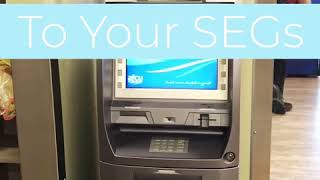
The reach. When the cost comes down, ATMs at SEG (employer) locations start to make sense, and those are where new members come from.
Five questions to ask about your current program
How many companies do you pay to keep one ATM running?
What did your total ATM cost do over the last three years?
The last time a machine was down, who on your staff made the calls, and how long did it take?
Are you paying for software or features your members don't use?
Would an ATM at an employer location pay for itself in new members if the cost were lower?
If the answers bother you, a side-by-side comparison is worth 15 minutes.
More from the machine you already have
Lower cost doesn't have to mean fewer features.
With MiniBranch Connection, members scan a QR code at the ATM and reach your staff by video, chat or voice on their own phone. They get live help, you buy no ITM hardware, and the machine stays free for the next member.
A fully branded ATM, with your message on the screens and receipts, works as a marketing kiosk every hour of the day, including when your branch is closed.
What our clients say
"These gentlemen listen to what your needs are and come up with the BEST solution to take care of you and your members."
Phil Heinlen, TRU Federal Credit Union
"They make ATM deployment incredibly easy, handling everything from deployment to setup with very little effort required from our team."
Melissa McCann, Seaport Federal Credit Union
See what your program would cost
AOne ATM has run ATM programs for credit unions and community banks for 30 years. We manage more than 1,500 ATMs for more than 50 institutions across the US.
Tell us about your ATMs and we'll show you what your program would look like with us, including what it would cost.




Comments